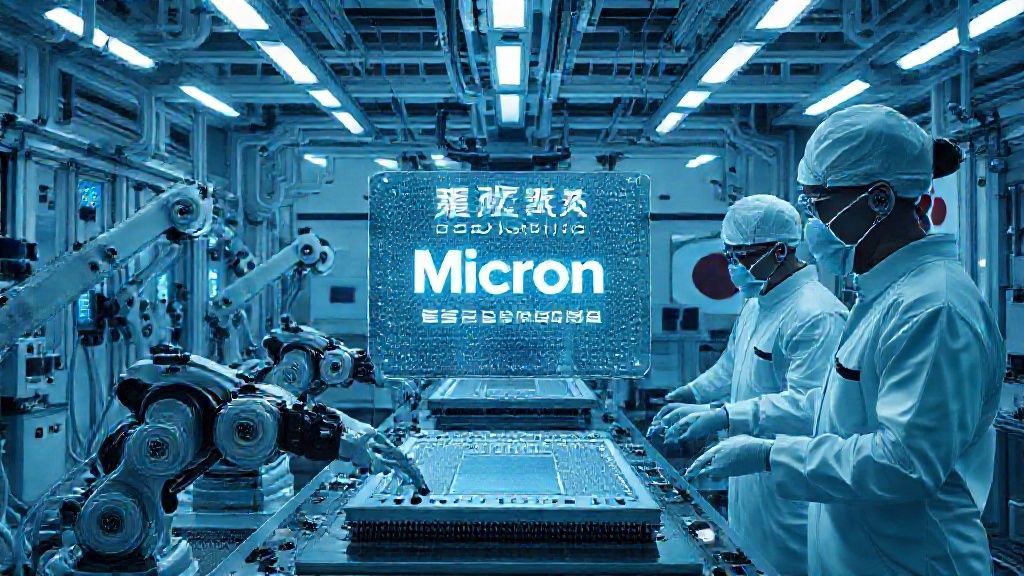
Micron Bets Big on AI Memory With New $9.6 Billion Chip Plant in Japan
Micron Technology is preparing one of its largest manufacturing bets yet, planning a 1.5 trillion yen (≈$9.6 billion) plant in Hiroshima, western Japan, dedicated to advanced memory chips for AI workloads. The move strengthens both Micron’s position in the high‑bandwidth memory (HBM) race and Japan’s strategy to rebuild its semiconductor base.
The Investment and What’s Planned
According to reports based on Nikkei coverage, the new facility will sit within Micron’s existing Hiroshima site and focus on AI memory.
Key details include:
- Total capex: 1.5 trillion yen (≈$9.6 billion) over the project’s life
- Location: New fab inside Micron’s Hiroshima campus in western Japan
- Timeline: Construction targeted to start May 2026, with HBM shipments around 2028
- Government support: Up to 500 billion yen in subsidies from Japan’s Ministry of Economy, Trade and Industry (METI)
Inside the New AI Memory Plant
The fab will manufacture high‑bandwidth memory (HBM), now critical for GPUs and AI accelerators from vendors like Nvidia.
Expected technology focus:
- HBM3E-class stacks with per‑stack bandwidths exceeding 1 TB/s, far above conventional DDR memory
- 3D‑stacked DRAM connected via through‑silicon vias (TSVs) and co-packaged next to GPUs/AI processors
- Optimizations for power efficiency, building on Micron’s HBM3E, which already claims ~30% lower power than rival offerings
- Integration into next‑generation AI systems and data center platforms targeting training and large‑scale inference
Why This Matters for AI and the Chip Industry
Demand for HBM has surged as AI models grow larger and more compute‑intensive, straining memory bandwidth in data centers worldwide.
The Hiroshima expansion:
- Strengthens Micron’s competition with SK hynix and Samsung, currently leading the HBM market
- Helps diversify production away from Taiwan, a key geopolitical risk point for the global AI supply chain
- Fits into Japan’s broader program—worth trillions of yen—to revitalize domestic chipmaking and attract advanced fabs from Micron, TSMC and others
What Comes Next
The project is still in the planning phase, with final specifications and capacity not yet publicly detailed. If construction begins on schedule in 2026 and HBM output ramps in 2028, the plant will come online just as the industry moves toward HBM4‑generation memory and denser AI clusters.
For AI builders, the bigger story is capacity: another multi‑billion‑dollar HBM source could ease supply constraints that have shaped GPU availability and pricing since 2023. For Japan, a successful Micron ramp would be a concrete sign that its subsidy‑driven semiconductor comeback is starting to pay off.